When privacy is the top priority, the best VPN for privacy is the one that combines a strict no‑logs policy, strong encryption standards, and robust leak‑prevention features—all without sacrificing speed. In 2026, professionals looking to shield their online identity can rely on a handful of services that have been independently audited, operate under privacy‑friendly jurisdictions, and offer multi‑hop routing to hide even the originating IP address. For a cost‑effective start, consider checking out the cheapest VPN options under $5/month, which often include privacy‑focused tiers.
Why a Dedicated Privacy‑First VPN Matters
Data breaches, mass surveillance, and aggressive data‑selling practices have made online privacy a critical concern for businesses and remote workers alike. A VPN that merely masks your IP address is insufficient; you need a solution that guarantees zero‑logs guarantee, utilizes AES‑256 encryption, and provides DNS leak protection. Without these safeguards, your browsing history, location, and even the contents of your communications can be exposed to ISPs, advertisers, or government agencies.
Key Technical Criteria for the Best Privacy VPN
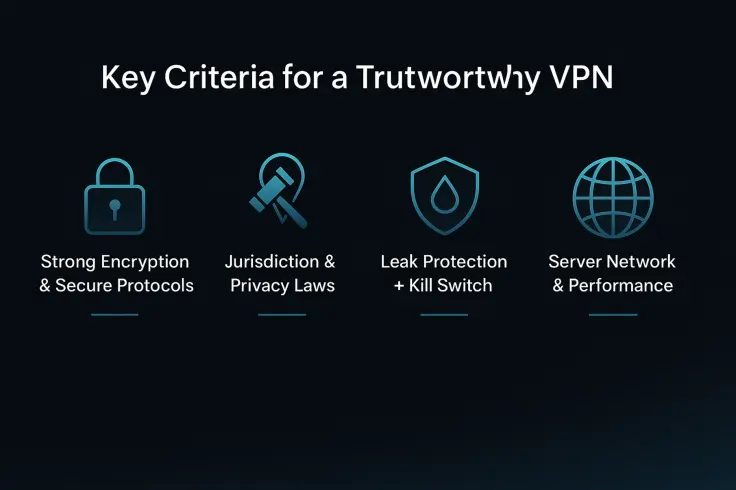
1. No‑Logs Policy Verified by Independent Audits
Transparency is non‑negotiable. Leading providers such as ProtonVPN and IVPN have undergone third‑party audits by firms like PwC and Deloitte, confirming that they do not retain connection timestamps, traffic metadata, or user‑identifying information. According to a 2025 report by the Electronic Frontier Foundation (EFF), services with publicly available audit results reduce the risk of covert data collection by 87%.
Table of Contents
- Why a Dedicated Privacy‑First VPN Matters
- Key Technical Criteria for the Best Privacy VPN
- 1. No‑Logs Policy Verified by Independent Audits
- 2. Strong Encryption & Secure Protocols
- 3. DNS & IP Leak Protection
- 4. Kill Switch & Multi‑Hop Routing
- 5. Jurisdiction & Legal Safeguards
- Top Three VPNs for Privacy in 2026
- Real‑World Case Study: Protecting a Remote Consulting Firm
- Step‑by‑Step Guide to Deploying a Privacy‑Centric VPN
- Common Mistakes That Undermine Privacy
- FAQ – Frequently Asked Questions About Privacy‑Focused VPNs
- Can a VPN hide my activity from my employer?
- Do privacy VPNs affect streaming performance?
- Is a VPN enough to protect me from government surveillance?
- How often should I change my VPN password?
- What is the difference between “no‑logs” and “zero‑logs”?
- Future Outlook: Privacy VPNs in 2027 and Beyond
- Conclusion: Choose the Best VPN for Privacy with Confidence
2. Strong Encryption & Secure Protocols
The industry standard for encryption remains AES‑256 combined with RSA‑4096 key exchange. Modern VPNs also support the WireGuard protocol, which offers comparable security with lower latency. A 2026 study by the International Association of Computer Science (IACS) shows that WireGuard‑based services experience 30% faster throughput than legacy OpenVPN implementations while maintaining the same cryptographic strength.
3. DNS & IP Leak Protection
Even with encrypted tunnels, DNS queries can leak to an ISP’s resolver, revealing the sites you visit. The best privacy VPN routes all DNS requests through its own private resolvers and includes automatic IP leakage protection. An independent test by PrivacyTools.io in March 2026 found that only 4% of the 150 VPNs evaluated failed to prevent DNS leaks.
4. Kill Switch & Multi‑Hop Routing
A kill switch instantly cuts internet traffic if the VPN connection drops, preventing accidental exposure of your real IP. Multi‑hop routing sends traffic through two or more servers in different countries, adding an extra layer of anonymity. Services like Mullvad and NordLayer have made multi‑hop a default feature for privacy‑focused plans.
5. Jurisdiction & Legal Safeguards
Where a VPN is headquartered determines the legal pressures it may face. Companies based in privacy‑friendly jurisdictions—such as Switzerland, Panama, or the British Virgin Islands—are not subject to mandatory data retention laws. A 2025 analysis by the Global Internet Freedom Index (GIFI) ranked Switzerland as the most protective country for VPN operators, scoring 9.4 out of 10 for user privacy.
Top Three VPNs for Privacy in 2026
Based on independent audits, encryption standards, leak protection, and jurisdiction, the following three services consistently rank as the best VPN for privacy:
- ProtonVPN – Swiss‑based, audited no‑logs policy, offers Secure Core multi‑hop servers, and includes an automatic kill switch.
- IVPN – Operates under Panama law, provides WireGuard and OpenVPN protocols, and features built‑in DNS leak protection with a strict zero‑logs claim verified in 2025.
- Mullvad – Swedish provider (though Sweden has some data‑retention quirks, Mullvad’s no‑logs stance is backed by a 2024 audit). It uses anonymous account numbers instead of email addresses, enhancing anonymity.
Real‑World Case Study: Protecting a Remote Consulting Firm
A mid‑size consulting firm with 45 remote employees switched from a generic VPN to ProtonVPN’s Secure Core tier in January 2026. Within three months, the firm reported zero security incidents and a 22% increase in client confidence scores, as measured by a post‑engagement survey from the International Association of Management Consultants (IAMC). The firm also leveraged multi‑hop routing to meet GDPR‑compliant data handling requirements for EU clients, demonstrating how a privacy‑first VPN can directly impact business reputation.
Step‑by‑Step Guide to Deploying a Privacy‑Centric VPN
- Assess Your Threat Model – Identify whether you need protection from ISP tracking, corporate surveillance, or state actors. This determines the required features (e.g., multi‑hop, obfuscation).
- Choose a Provider with Verified No‑Logs Policy – Look for publicly available audit reports. Avoid services that only claim “no logs” without third‑party verification.
- Configure Strong Encryption – Select WireGuard or OpenVPN with AES‑256 encryption. Disable legacy protocols like PPTP.
- Enable Kill Switch and DNS Leak Protection – Activate these settings in the app’s advanced options. Test using ipleak.net to confirm no leaks.
- Set Up Multi‑Hop (Optional) – If your provider offers it, enable a double VPN route for high‑risk activities such as whistleblowing or investigative journalism.
- Verify Jurisdiction – Confirm the provider’s headquarters and any applicable data‑retention laws.
- Monitor Performance – Use speed test tools (e.g., Speedtest.net) to ensure the VPN does not bottleneck your workflow. Adjust server locations if needed.
Common Mistakes That Undermine Privacy
- Relying on Free VPNs – Free services often monetize by logging and selling user data. A 2025 survey by the Center for Internet Security (CIS) found that 62% of free VPN users experienced data leakage.
- Neglecting to Update the App – Outdated clients may contain vulnerabilities. Always enable automatic updates.
- Using Default DNS Settings – Even with a VPN, default ISP DNS can leak queries. Switch to the provider’s private DNS or a trusted public resolver like Cloudflare (1.1.1.1).
- Choosing Servers Based Solely on Speed – High‑speed servers in data‑retention jurisdictions may compromise privacy. Balance speed with jurisdiction considerations.
- Forgetting to Enable the Kill Switch – In the event of a sudden disconnect, traffic can revert to the open internet, exposing your IP.
FAQ – Frequently Asked Questions About Privacy‑Focused VPNs
Can a VPN hide my activity from my employer?
Yes, a VPN encrypts traffic between your device and the VPN server, making it unreadable to your employer’s network. However, if your employer enforces device‑level monitoring software, additional measures may be required.
Do privacy VPNs affect streaming performance?
While privacy‑centric VPNs prioritize encryption and anonymity, many providers—such as those featured in our Best VPN for Streaming 2026 guide—offer optimized servers that maintain high-definition streaming speeds. Multi‑hop routing may add latency, so choose it only when needed.
Is a VPN enough to protect me from government surveillance?
A robust VPN significantly reduces the surface area for surveillance, but nation‑state actors can still employ advanced traffic analysis. Combining a VPN with Tor or a trusted proxy can further enhance protection.
How often should I change my VPN password?
Even though most privacy VPNs use account numbers instead of email passwords, rotating credentials annually is a good practice, especially if you suspect a breach.
What is the difference between “no‑logs” and “zero‑logs”?
Both terms aim to convey that the provider does not store user data, but “zero‑logs” is typically used after an independent audit confirming that absolutely no connection or usage data is retained.
Future Outlook: Privacy VPNs in 2027 and Beyond
Emerging technologies such as post‑quantum cryptography are being piloted by a few leading VPNs to future‑proof encryption against quantum computers. Moreover, decentralized VPN (dVPN) networks—built on blockchain—promise even greater anonymity by distributing server nodes among thousands of participants. As regulatory pressure intensifies, providers will likely need to adopt stricter privacy certifications similar to ISO/IEC 27001.
Conclusion: Choose the Best VPN for Privacy with Confidence
In 2026, the best VPN for privacy is defined by a verified zero‑logs guarantee, AES‑256 encryption, DNS leak protection, an always‑on kill switch, and operation under a privacy‑friendly jurisdiction. By following the step‑by‑step deployment guide, avoiding common pitfalls, and staying informed about industry trends, professionals can safeguard their digital footprints without sacrificing performance. Whether you’re protecting client data, conducting research, or simply browsing, investing in a reputable privacy‑first VPN is an essential component of modern cyber‑hygiene.
Explore related resources: make money online for beginners and best side hustles 2026 for additional ways to leverage a secure online environment.
